
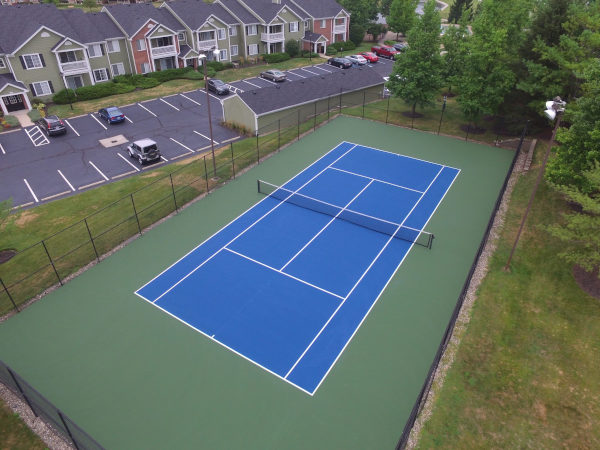
A clean court plays better, lasts longer, and looks the way it should. Dirt, leaves, mold, and organic debris do more than make your surface look neglected. They create slip hazards and can actually break down your court coating over time.
The good news is that routine cleaning is straightforward. You do not need specialized equipment or expensive products. But in Indiana, timing and technique both matter.
When Is the Best Time to Clean Sports Courts in Indiana
Late spring is the sweet spot for most Indiana courts. You want to wait until winter is actually behind you, which means watching for multiple consecutive days where the overnight low stays above 32°F.
Cleaning too early creates problems. If you wash your court and temperatures drop below freezing overnight, any moisture trapped in small cracks or surface imperfections can freeze, expand, and cause damage. Indiana springs are unpredictable. A warm week in March does not mean winter is over.
For most of the state, late April through May is reliable. By then, you have consistent warmth, longer days for drying, and enough time to address any issues before heavy summer use.
If you missed spring, early fall works too. Just make sure to get it done before the first frost so everything dries completely and you have time to seal any cracks before winter.
What You Need
Keep it simple. You do not need specialized equipment or harsh chemicals. For routine cleaning, you need a soft bristle broom (push brooms work well), a mild dish detergent like Dawn, and a garden hose with decent water pressure.
That is it. The goal is to remove surface debris and grime without damaging the acrylic coating or texture of your court.
How to Clean Your Court
Cleaning a sports court is not complicated, but doing it methodically makes a difference. Here is the process we recommend.
- Clear loose debris. Before you add any water, walk the court and remove leaves, branches, and any larger debris by hand or with a leaf blower. This prevents you from pushing dirt around or clogging your drainage areas once you start rinsing.
- Spray down the entire surface. Use your garden hose to wet the whole court. This loosens surface dirt, softens any caked-on grime, and prepares the surface for cleaning. Work from one end to the other so dirty water flows toward your drainage, not back across areas you have already rinsed.
- Apply soap to problem areas. For spots with visible dirt buildup, staining, mold, or organic growth, apply a small amount of mild dish soap directly to the area. You do not need to soap the entire court unless it is heavily soiled. Focus on the trouble spots.
- Scrub gently with a soft bristle broom. Work the soap into the surface using light, even strokes. You are not scrubbing aggressively here. The goal is to lift the grime, not grind it into the surface or damage the texture. A push broom with soft bristles works well for this. Avoid stiff brushes or wire bristles, which can scratch the acrylic coating.
- Rinse thoroughly. Once you have worked the soaped areas, rinse the entire court with your garden hose. Make sure all the soap residue is removed. Soap left on the surface can become slippery when wet and may attract more dirt over time. Again, work in a direction that sends water toward your drainage.
- Let it dry naturally. Allow the court to air dry completely before playing on it. If you have good drainage and a sunny day, this usually takes a few hours. Avoid the temptation to squeegee standing water into cracks or low spots, as this can push dirt and debris into places where it causes problems later.
- Inspect for damage. Once the court is clean and dry, take a few minutes to walk the surface and look for any cracks, peeling, or areas where the coating is wearing thin. Catching small issues now means you can address them before they become expensive repairs.
Dealing with Cracks
Hairline cracks are common on asphalt and concrete courts, especially after a few Indiana winters. If you notice small cracks forming, call us. We use elastomeric crack fillers designed specifically for sports courts.
These are flexible, acrylic-based materials that expand and contract with the pavement. Unlike rigid fillers, they move with the surface through freeze-thaw cycles. That is important in our climate, where temperatures can swing 40 degrees in a single day during spring and fall. A proper elastomeric filler keeps water out and prevents small cracks from becoming big problems.
Getting cracks sealed before winter makes a real difference. Water gets into cracks, freezes, expands, and makes them worse. Addressing them in spring or fall keeps your court resurfacing needs further down the road.
What About Pressure Washing?
We generally do not recommend pressure washing sports courts. The acrylic surface coatings on tennis, pickleball, and basketball courts are durable, but they are not designed to withstand high-pressure water streams at close range.
If you choose to pressure wash anyway, follow these guidelines. Use a wide tip, not a narrow one. Keep the pressure at or below 1000 PSI. Maintain at least 18 inches between the tip and the court surface. Anything closer and you risk gouging the coating or stripping away the texture that provides traction.
For most situations, a garden hose and soap get the job done without the risk.
What Not to Do
We have seen a lot of well-intentioned DIY repairs go sideways. Here is what to avoid.
Do not use harsh chemicals. Bleach, automotive degreasers, and industrial cleaners can damage your court coating, discolor the surface, and break down the acrylic over time. Mild dish soap is all you need.
Do not use caulk to fill cracks. Standard silicone or acrylic caulk from the hardware store is not designed for sports surfaces. It does not bond properly, does not flex with temperature changes, and tends to peel away within a season. Use proper elastomeric crack filler, or call a professional.
Do not use house paint for touch-ups. Regular latex or acrylic house paint is not formulated for sports surfaces. It lacks the texture and durability required for foot traffic and ball bounce. It will peel, chip, and create inconsistent playing characteristics. Court resurfacing uses specialized coatings with sand additives that provide proper traction and wear resistance.
When to Call a Professional
Routine cleaning is easy to handle yourself. But if you are seeing cracks spread, color fading significantly, surface peeling, or drainage problems, it is time to get a professional assessment.
We work with homeowners, HOAs, schools, and parks departments across Indiana. Whether you have a backyard pickleball court or a multi-court tennis facility, we can evaluate your court condition and recommend the right maintenance approach. Call us for a free estimate or to schedule a crack repair before the next Indiana winter rolls around.